Is It Cheaper to Make Candles or Buy Them? The Real Cost per Candle
By Nadia Colbert, candle maker since 2014 · Updated
The question comes up at every kitchen table where a kit has just been unboxed: does making your own candles actually cost less than picking one off a shelf? The answer depends on which candle you count. The first one you pour is the most expensive candle you will ever own, because it carries the price of the pitcher, the wicks, the dyes and everything else in the box. Every candle after it sheds most of that weight. This guide works through the numbers the way we work through everything else on this site: with the figures the kit actually publishes, and with ranges wherever the market only offers ranges.
In this guide
What a shop candle costs — the generic price ranges, and what sits inside them.
The kit price, divided — $49.95 against fourteen vessels, as plain arithmetic.
The second batch — why a refill costs a fraction of the first pour.
Fourteen candles, priced both ways — the same count from a shelf.
What the receipt does not show — the evening, the cure, the test candles.
What the same dollars control — scent load, wax family, vessel.
The arithmetic in one table — every number and where it comes from.
What a Store-Bought Candle Costs
It helps to see what a shelf price actually contains. The wax, the wick and the fragrance are a modest share of it; the rest is the jar, the label, the packaging, the shipping and the retail space the candle sat in while it waited for you. None of that is scandalous, it is simply what it costs to sell a finished object one at a time. But it explains why two candles of the same size can sit three shelves apart at three times the price: you are paying for everything around the wax at least as much as for the wax itself.
The other property of the shop candle is that it is entirely consumed. When the flame reaches the sustainer tab, the object you paid for is gone, and the vessel it came in was designed as packaging rather than as equipment. A candle habit at shop prices is therefore a subscription in disguise: the same $10 to $25 leaves your pocket every few weeks for as long as you like having a lit candle in the room. That recurring shape, more than any single price tag, is what the arithmetic below is really comparing against.
The Kit Price, Divided by the Box
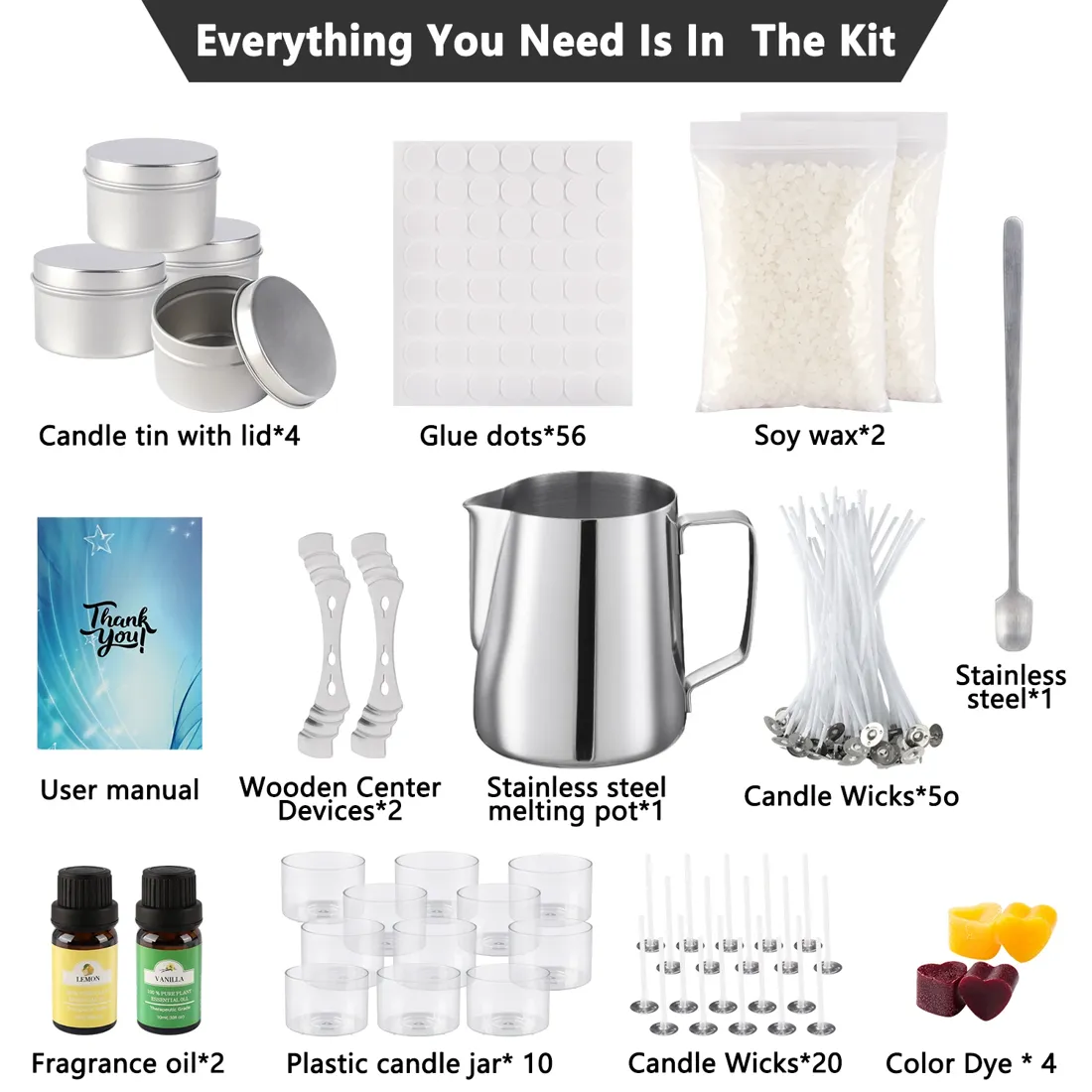
Here is the full contents list the division rests on. The candle making kit contains one stainless steel melting pitcher, two bags of soy wax, 50 candle wicks plus 20 extra wicks, four candle tins with lids, ten plastic candle jars, two fragrance oils in lemon and vanilla, four color dyes, two wooden centering devices, one stainless steel spoon, 56 glue dots, and a user manual. Fourteen vessels, seventy wicks, one price. $49.95 divided by fourteen is about $3.57 per vessel. Compare this with local candle prices in the same currency.
Treat that figure the way we treat every calculated number on this site: as arithmetic, not as a capacity promise. The wax bags do not print a weight, so how far they stretch depends on how deep you pour each vessel, and fourteen is the container count rather than a guaranteed candle count. The way to turn it into your own number is the water test in the candle wick size guide, whose "How Much Wax per Candle" section works the volumes of these exact tins and jars with a kitchen scale. What the division does show, fairly, is the shape of the deal: one shelf price buys one candle, while $49.95 buys a batch of vessels and every tool the batch needs.
Why the Second Batch Costs a Fraction of the First
This is the split that shop prices never let you see. A finished candle bundles its equipment and its consumables into one number and burns them together. A kit separates them. Burn a tin down, wipe it out while the residue is still soft, and the vessel goes back into service with a fresh wick and a glue dot; the tin itself is already paid for. Soy is forgiving in the same direction: a candle that came out wrong goes back into the pitcher and comes out again as a better one, so even a failed pour is a delay rather than a loss.
Restocking, when it comes, means buying wax and fragrance rather than candles. Wax bought by the bag is priced as a raw material, not as a finished object, and one bag spreads across a whole shelf of vessels. The candle making supplies page keeps the full ledger of what runs out and what does not, and it is a short list on the running-out side. The practical consequence: the first batch includes the hardware cost; later batches reuse that equipment, while wax and fragrance costs depend on where you buy them.
Fourteen Candles, Priced Both Ways
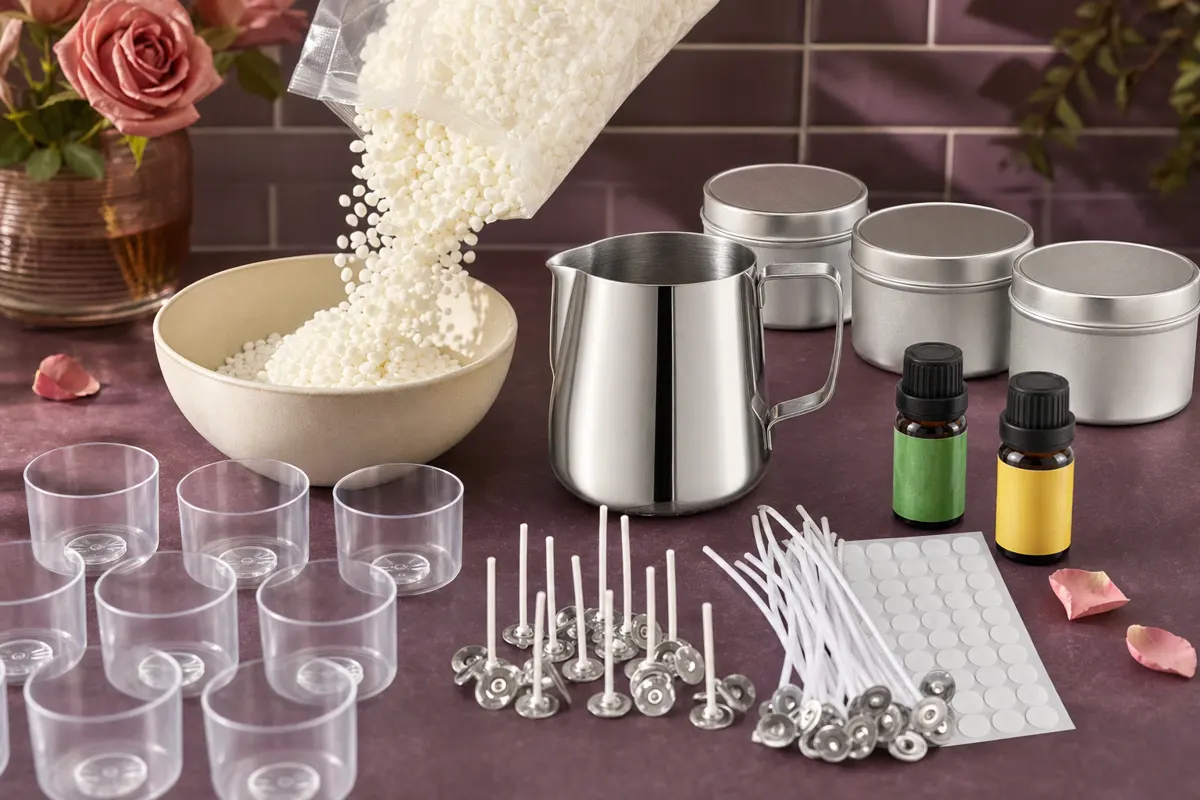
For a like-for-like comparison, use local shelf prices and the kit price shown for your selected market, in the same currency. The kit includes equipment you can reuse; later batches need replacement wax, fragrance and other consumables, whose prices vary by supplier.
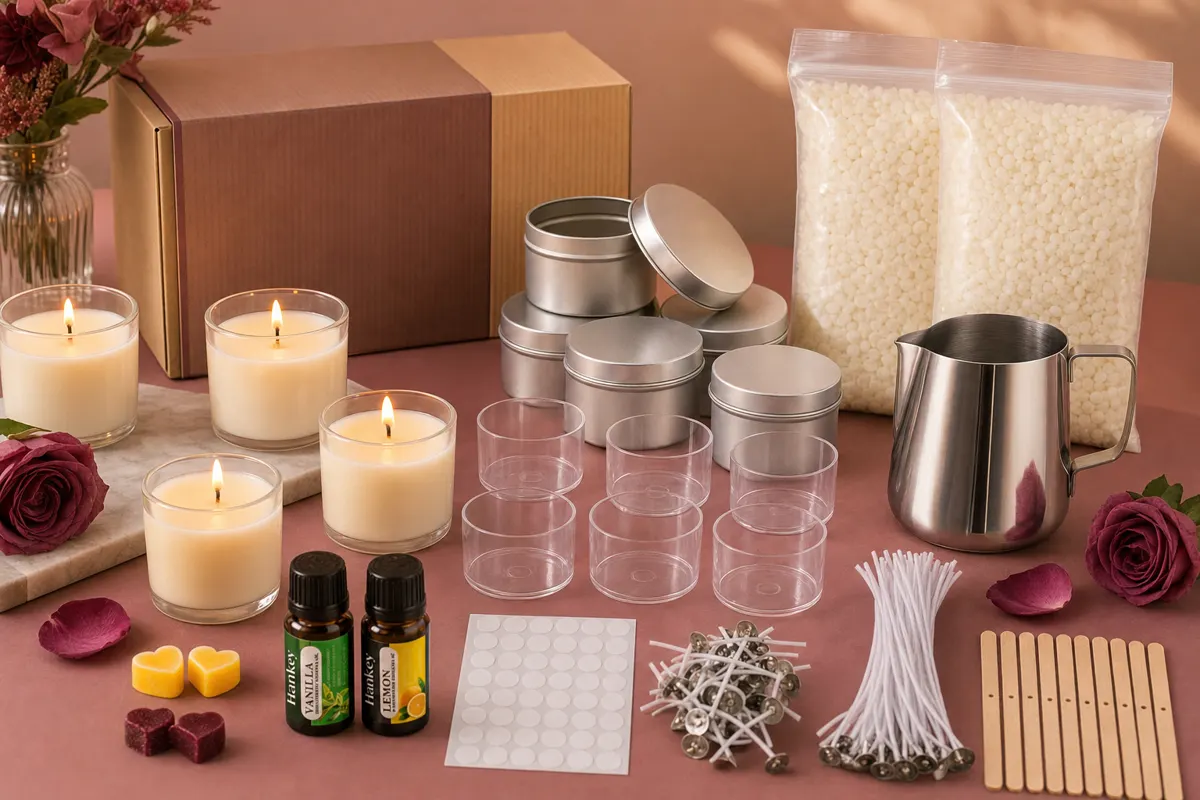
The count matters for another reason buyers keep mentioning: a batch of fourteen is more candles than most households burn in a season, which is why so many of them leave the house. Ten small jars is a stack of gifts at a per-vessel cost that makes generosity easy, and the reviews page is full of first batches that were poured on a weekend and given away by the following one. Across verified buyer data for 2026, the kit holds a 4.9 out of 5 average across its 105 four and five star reviews, with more than 900 units sold.
What the Receipt Does Not Show
A complete cost account should say so plainly. The pouring sequence itself, melting, scenting, wicking, pouring, is an evening's work, and the walkthrough in how to make candles at home shows how much of that evening is the wax cooling rather than you working. Curing adds several days of doing nothing at all, which is the step everybody skips exactly once; how to make soy candles explains why soy in particular repays the wait.
The other line the receipt never shows is the learning. Your first candle in a new container is a test burn, and it may tell you to size the wick up or down before the pairing settles. That is not money leaking out of the project: the spares exist for it, seventy wicks against fourteen vessels is a five-to-one margin, and a candle you are unhappy with remelts into the next attempt. Two or three deliberate tests settle a container style for good, and the wax those tests used is still in service. Time is the one genuine cost of making over buying, and it is the cost people take up the hobby in order to spend.
What the Same Dollars Control
Scent strength is the lever people notice first. A homemade candle smells of exactly as much lemon or vanilla as you stirred into it, and if the last batch read too faint, the next one is a percentage adjustment rather than a fresh purchase. The two oils in the kit make that experiment cost a single pour: one tin at your usual load, one lower, and the cured pair answers the question. No shelf offers that, because a shop candle is one point on the dial and the dial belongs to someone else.
Wax is the same story one level down. The kit ships container soy because it is the forgiving family, but the moment you restock you are choosing rather than accepting, and the candle wax types guide compares the families precisely for that second purchase. This is the part of the arithmetic that does not fit in a table: after the first batch, your money buys candles tuned to your room, your nose and your vessels, at a refill price. The shelf can match the object; it cannot match the control.
Is It Cheaper to Make Candles? The Arithmetic in One Table
| What you are paying for | The number | Where it comes from |
|---|---|---|
| One mid-size scented candle from a shelf | Commonly $10 to $25 | Generic market range; repeats each time one burns down |
| The complete kit | $49.95 | Published price; fourteen containers, seventy wicks, wax, oils, dyes, hardware |
| First batch, per vessel | About $3.57 | $49.95 divided by the fourteen published containers; arithmetic, not a capacity promise |
| A refill in a used tin or jar | Wax, fragrance and one wick | Vessel and equipment already paid; see what runs out on the supplies page |
| A candle that came out wrong | Remelted, not discarded | Soy returns to the pitcher and pours again |
So, is it cheaper to make candles or buy them? The cost per candle depends on local supplies and shelf prices, while reusing the hardware can reduce the cost of later batches. The shelf still has one advantage, immediacy: a bought candle burns tonight, while a poured one asks for an evening and a cure. If lighting one candle this month is the whole plan, the shelf serves it. If candles are a habit, a hobby or a gifting season, the kit turns each one from a $10 to $25 purchase into a few dollars of wax and fragrance. The kit sells for $49.95, down from $69.95, with free shipping, delivery in 6 to 10 business days, and a 30 day guarantee.